Washcan provides sustainable circular solutions designed specifically for high-speed rail systems, railways, tourism trains, and public transportation networks. Through low-carbon headrest covers, recyclable textile materials, closed-loop recovery systems, and ESG data integration, Washcan helps transportation brands build a circular economy model that combines environmental responsibility, passenger experience, and long-term brand value.
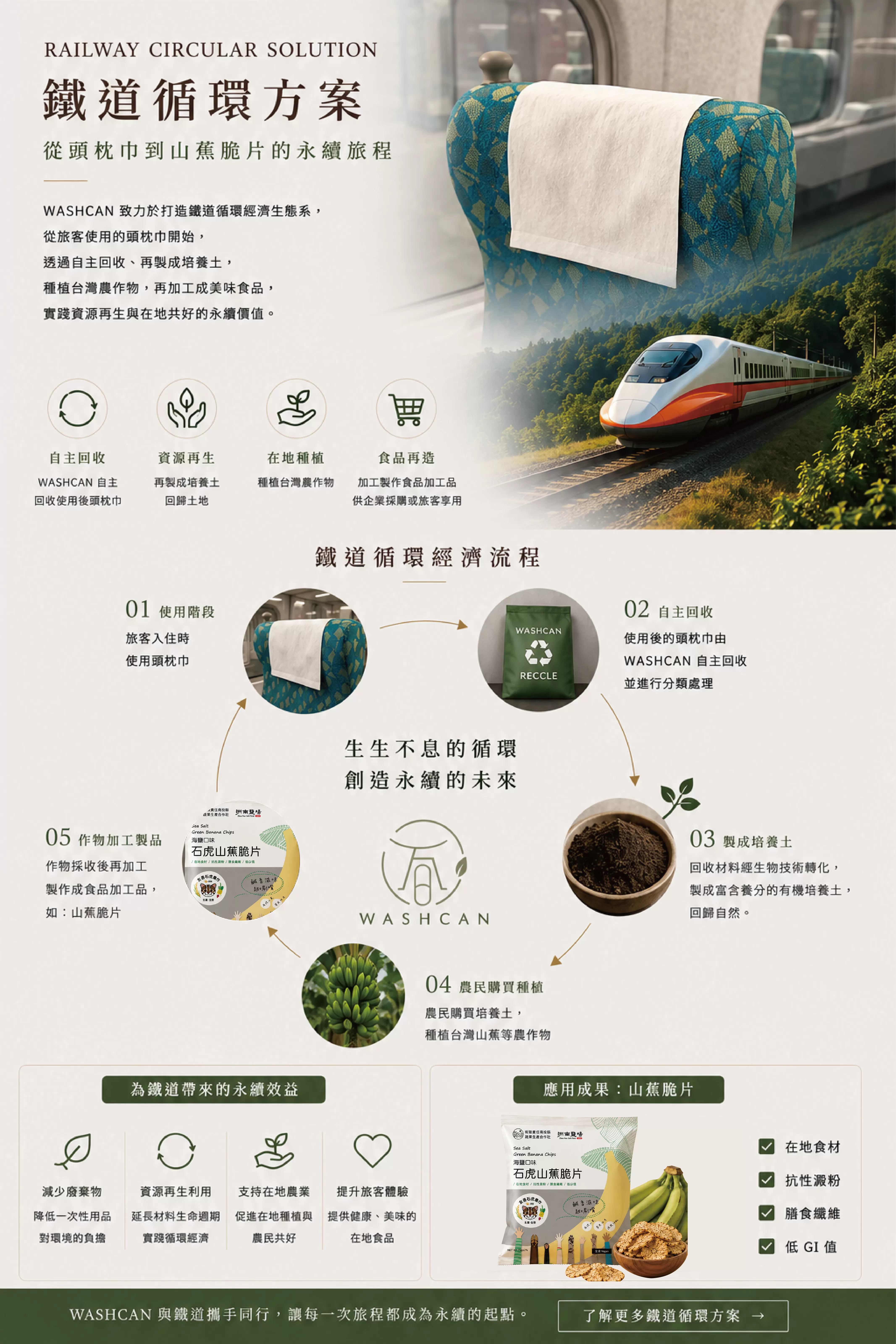
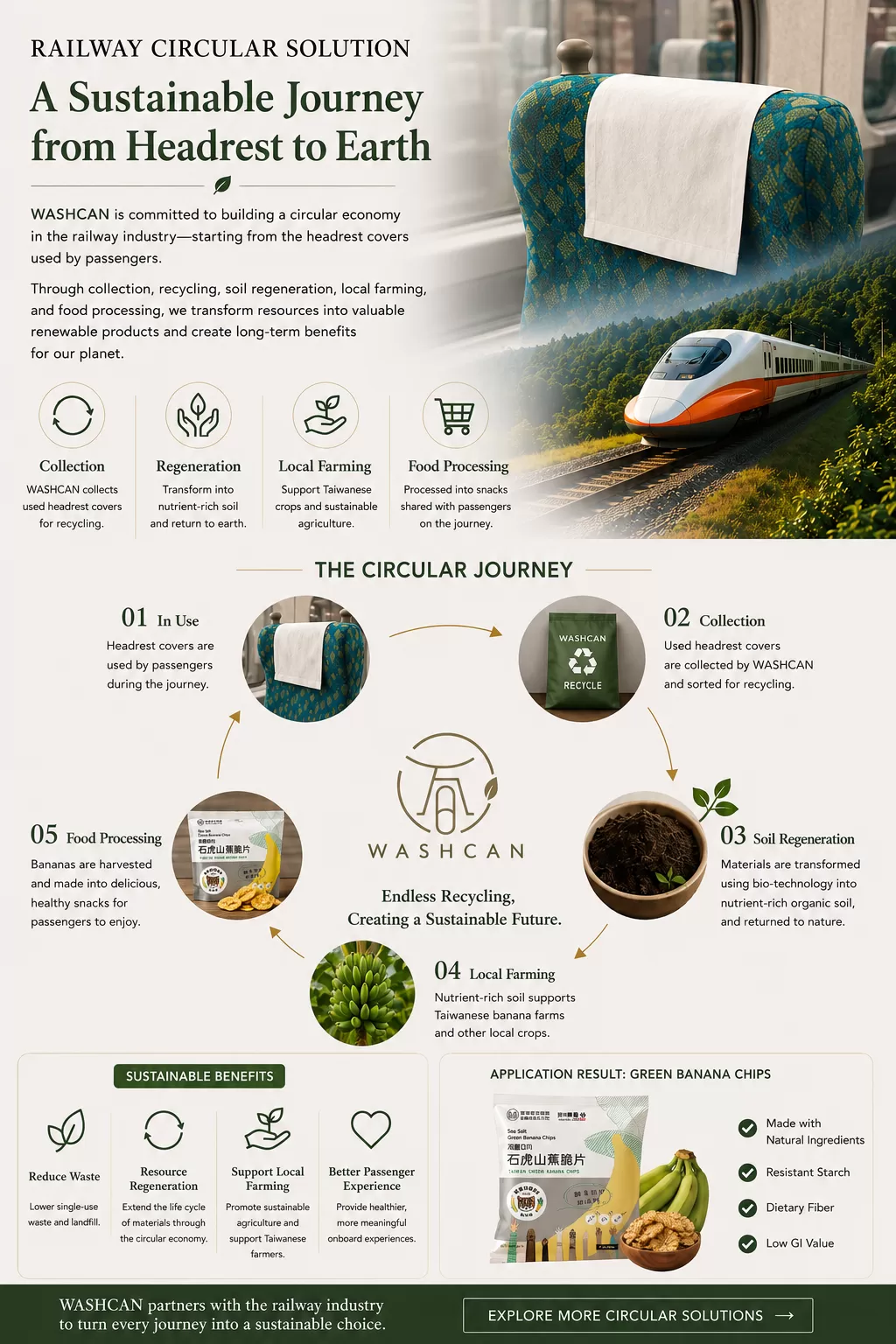
Unlike traditional single-use railway consumables that are disposed of through incineration after use, Washcan is built around the concept of “Circular Railway” — introducing recyclable, biodegradable, and low-plastic textile products for the transportation industry. Through a circular recovery system, used headrest covers and textile materials are collected and transformed into nutrient-rich soil and regenerative agricultural resources, creating a sustainable cycle that extends from railway services back to the earth.
This solution explores:
Washcan provides sustainable circular solutions designed specifically for high-speed rail systems, railways, tourism trains, and public transportation networks. Through low-carbon headrest covers, recyclable textile materials, closed-loop recovery systems, and ESG data integration, Washcan helps transportation brands build a circular economy model that combines environmental responsibility, passenger experience, and long-term brand value.
Unlike traditional single-use railway consumables that are disposed of through incineration after use, Washcan is built around the concept of “Circular Railway” — introducing recyclable, biodegradable, and low-plastic textile products for the transportation industry. Through a circular recovery system, used headrest covers and textile materials are collected and transformed into nutrient-rich soil and regenerative agricultural resources, creating a sustainable cycle that extends from railway services back to the earth.
This solution explores:
Washcan provides sustainable circular solutions designed specifically for high-speed rail systems, railways, tourism trains, and public transportation networks. Through low-carbon headrest covers, recyclable textile materials, closed-loop recovery systems, and ESG data integration, Washcan helps transportation brands build a circular economy model that combines environmental responsibility, passenger experience, and long-term brand value.
Unlike traditional single-use railway consumables that are disposed of through incineration after use, Washcan is built around the concept of “Circular Railway” — introducing recyclable, biodegradable, and low-plastic textile products for the transportation industry. Through a circular recovery system, used headrest covers and textile materials are collected and transformed into nutrient-rich soil and regenerative agricultural resources, creating a sustainable cycle that extends from railway services back to the earth.
This solution explores:
・ESG and carbon reduction trends in the railway and transportation industry
・Circular transformation models for headrest covers and single-use consumables
・How railway brands can create sustainability experiences passengers can genuinely see and feel
・Real-world applications of recycling and circular economy systems
・Scope 3 emissions and low-carbon supply chain strategies
・An introduction to the Washcan Circular Railway System™
Ideal for:
High-speed rail operators, railway systems, tourism trains, public transportation brands, transportation authorities, ESG and sustainability departments, procurement and operations teams, and organizations focused on the future of sustainable mobility.
Through Washcan’s railway sustainability solutions, transportation becomes more than movement — it becomes a regenerative journey that reconnects people, land, the environment, and future generations.ESG and carbon reduction trends in the railway and transportation industry
Circular transformation models for headrest covers and single-use consumables
How railway brands can create sustainability experiences passengers can genuinely see and feel
Real-world applications of recycling and circular economy systems
Scope 3 emissions and low-carbon supply chain strategies
An introduction to the Washcan Circular Railway System™
Ideal for:
High-speed rail operators, railway systems, tourism trains, public transportation brands, transportation authorities, ESG and sustainability departments, procurement and operations teams, and organizations focused on the future of sustainable mobility.
Through Washcan’s railway sustainability solutions, transportation becomes more than movement — it becomes a regenerative journey that reconnects people, land, the environment, and future generations.ESG and carbon reduction trends in the railway and transportation industry
Circular transformation models for headrest covers and single-use consumables
How railway brands can create sustainability experiences passengers can genuinely see and feel
Real-world applications of recycling and circular economy systems
Scope 3 emissions and low-carbon supply chain strategies
An introduction to the Washcan Circular Railway System™
Ideal for:
High-speed rail operators, railway systems, tourism trains, public transportation brands, transportation authorities, ESG and sustainability departments, procurement and operations teams, and organizations focused on the future of sustainable mobility.
Through Washcan’s railway sustainability solutions, transportation becomes more than movement — it becomes a regenerative journey that reconnects people, land, the environment, and future generations.